
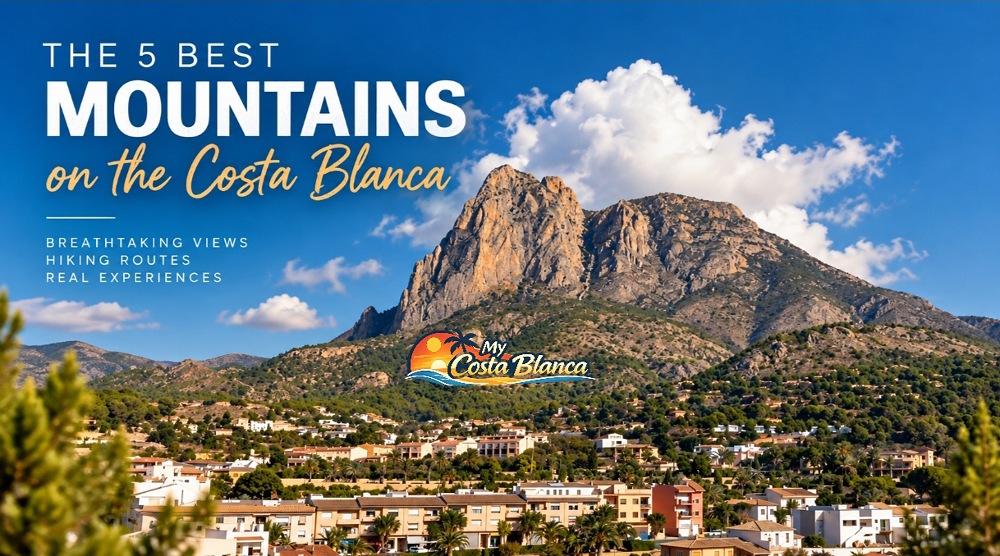
When people hear Costa Blanca, they usually picture beaches.
Blue Mediterranean water. Long promenades. Palm trees. White villages overlooking the sea.
But look inland.
It doesn’t take long before the landscape changes completely. The flat coastal strip gives way to dramatic limestone mountains, deep valleys, pine forests and some surprisingly wild landscapes.
In fact, some of the most spectacular views on the Costa Blanca have very little to do with the beach.
From the 1,558-metre summit of Aitana to the cliffs of Serra Gelada above the Mediterranean, these mountains are one of the reasons the Costa Blanca is so much more than a summer beach destination.
Here are five of the best mountains and mountain ranges to discover on the Costa Blanca — plus one iconic landmark that simply couldn’t be left out.
1. Sierra de Aitana – The Highest Point in Alicante
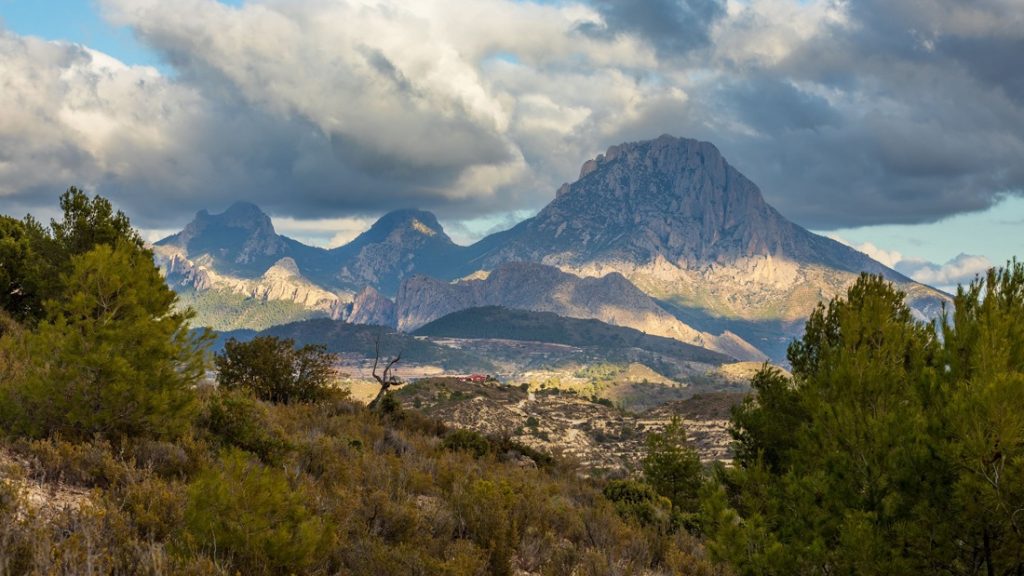
Elevation: 1,558 metres
If you want to start at the top, literally, this is where to begin.
Sierra de Aitana is the highest mountain in Alicante province, rising to 1,558 metres above sea level. The mountain forms part of the spectacular interior landscape behind Benidorm and the Marina Baixa.
And this is not simply a case of climbing a high mountain and ticking a box.
Aitana is about the views.
From the higher parts of the range, you can look across an enormous section of Alicante province. On a clear day, the Mediterranean coast, Puig Campana, Sierra de Bèrnia and the surrounding valleys all form part of the panorama.
The mountain is particularly impressive because of how dramatically it rises above the surrounding landscape.
Down below you have the coast, Benidorm and the Mediterranean.
Up here, it feels like another world.
There is one important detail for hikers: the actual highest point of Aitana is inside a military installation, so hikers normally reach a nearby alternative summit rather than the exact geographical high point. The difference is small, while the views are still spectacular.
Best for:
- Big mountain views
- Experienced hikers
- Photography
- Escaping the summer heat
- Discovering the inland Costa Blanca
And if you are staying around Benidorm, Altea or Guadalest, Aitana is one of the mountains that should be on your radar.
2. Puig Campana – The Mountain That Defines Finestrat
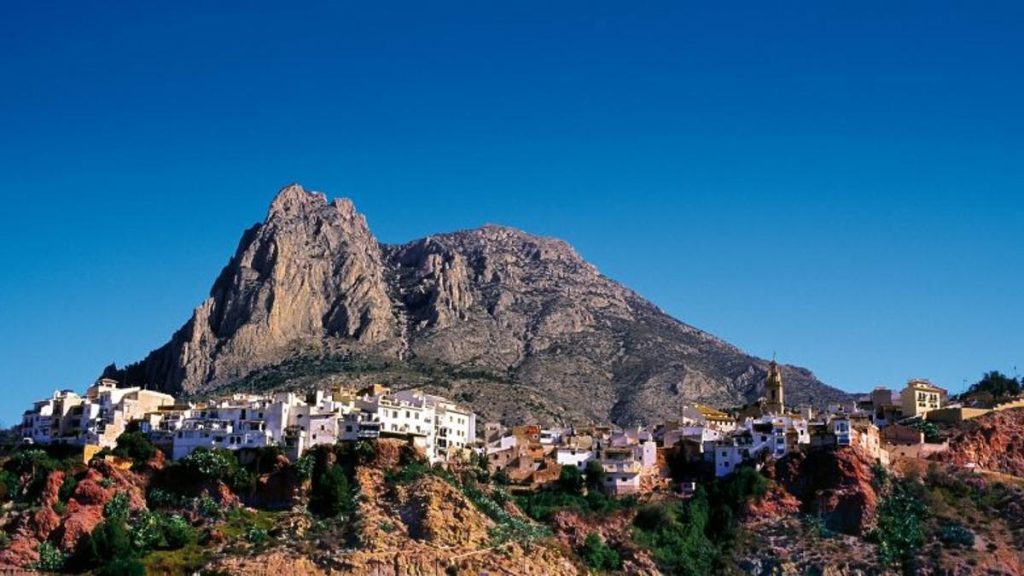
Elevation: around 1,410 metres
If Aitana is the highest, Puig Campana may be the most dramatic.

Rising directly behind Finestrat, Puig Campana is one of the defining landmarks of the Costa Blanca.
Its huge limestone profile is impossible to miss from the surrounding area. From Benidorm and the coastal plain, it looks almost unreal – particularly because of how close such a substantial mountain is to the Mediterranean.
The mountain reaches approximately 1,410 metres and is one of the most emblematic mountains of the Costa Blanca. The protected Puig Campana–Ponotx landscape also contains considerable biodiversity and endemic plant species.
For hikers, this is serious territory.
A full ascent is not a casual afternoon stroll. It involves significant elevation gain and some demanding sections, so good footwear, water and sensible planning are essential.
But you don’t have to climb to the summit to appreciate Puig Campana.
Even from Finestrat, the mountain dominates the landscape.
And that is part of its appeal.
You can spend the morning exploring a traditional mountain village and, less than half an hour later, be back on the Mediterranean coast.
That combination is one of the things that makes this part of Alicante so special.
Best for:
- Experienced hikers
- Dramatic mountain scenery
- Finestrat and Benidorm visitors
- Photography
- Seeing the Costa Blanca from a completely different perspective
3. Serra de Bèrnia – The Mountain With a Hole Through It
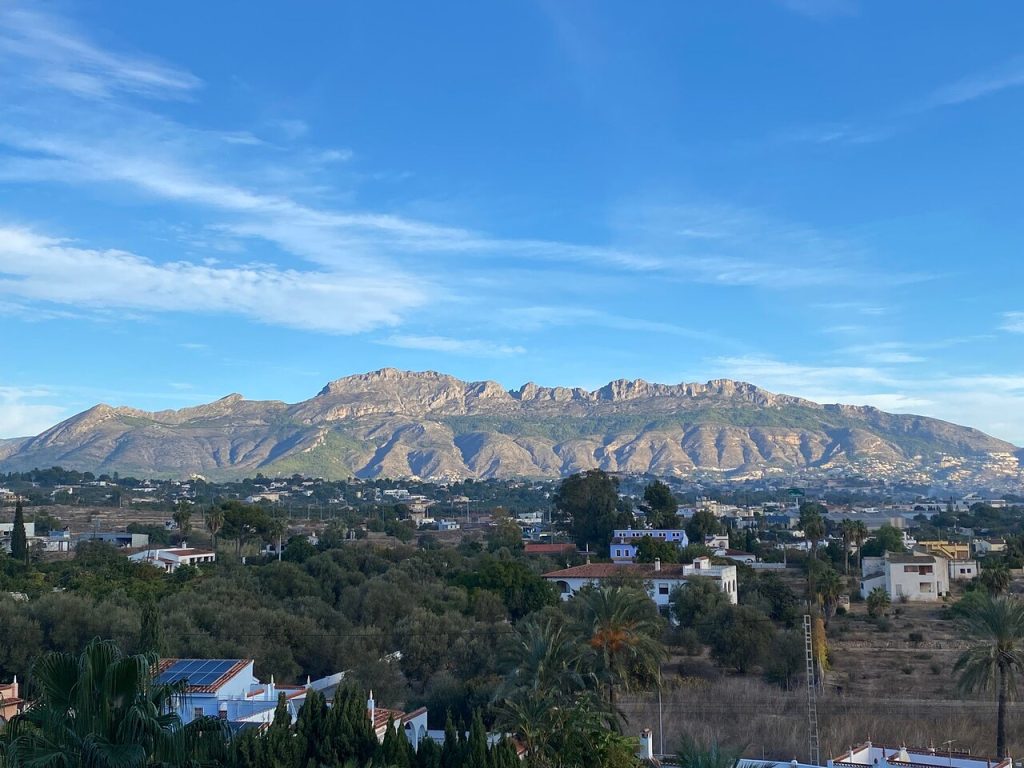
Highest point: around 1,128 metres
There are plenty of mountains where the reward is the view from the summit.
Bèrnia offers something slightly different.
The Forat de Bèrnia is a natural tunnel through the limestone ridge, and walking through it feels like one of those moments when a hiking route suddenly becomes much more memorable.
One minute you are walking through the mountain.
The next, you emerge onto the other side with an extraordinary view towards the Mediterranean and the surrounding valleys.
The mountain itself forms an impressive natural divide between the Marina Alta and Marina Baixa areas.
The Bèrnia route is not necessarily the easiest on this list, but it is one of the most rewarding.
And the best part?
You don’t need to be obsessed with reaching the highest possible point.
The mountain experience itself is the attraction.
Best for:
- A memorable hiking experience
- The Forat de Bèrnia
- Mountain photography
- Views towards Altea and the coast
- Combining hiking with a visit to nearby villages
If you are staying around Altea or Calpe, this is one to put high on your list.
4. Montgó – The Mountain Between Dénia and Jávea
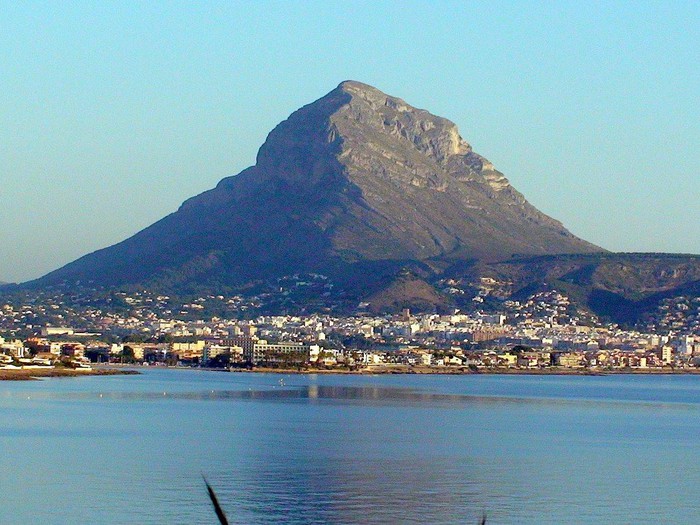
Elevation: 753 metres
Montgó may not be the highest mountain on our list, but don’t let the number fool you.
Its position makes it one of the most spectacular.
The Montgó massif rises dramatically between Dénia and Jávea, reaching out towards the Mediterranean like a giant limestone watchtower.
It is also part of the Parc Natural del Montgó, making it one of the most important protected natural areas on this section of the Costa Blanca.
From the higher sections, the views stretch across both the coastline and the surrounding inland landscape.
And there is something particularly enjoyable about hiking here because you never feel completely disconnected from the Mediterranean.
The sea is always somewhere in the picture.
Montgó is also an excellent choice if you are basing yourself around Dénia or Jávea and want to add a proper mountain experience to a coastal holiday.
And when you have finished?
You are only minutes away from the restaurants, beaches and old streets of Dénia or Jávea.
That is difficult to beat.
Best for:
- Dénia and Jávea visitors
- Coastal mountain scenery
- Hiking with sea views
- Combining nature with a beach holiday
- Exploring the Montgó Natural Park
5. Serra Gelada – Where the Mountains Meet the Sea
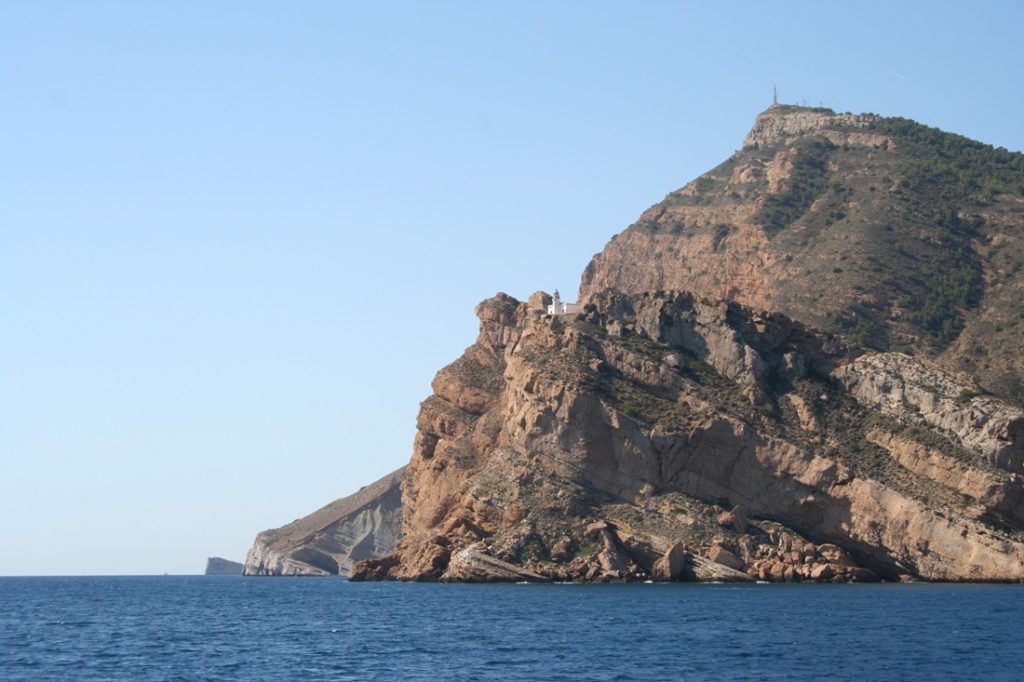
Highest point: around 435 metres
Technically, this is where our list gets a little different.
Serra Gelada isn’t the highest mountain range on the Costa Blanca.
It doesn’t need to be.
Because where else can you walk along a mountain ridge with the Mediterranean dropping away beneath you, while Benidorm and Altea sit on either side?
The Serra Gelada Natural Park stretches along the coastline between Benidorm and Altea, creating one of the most spectacular coastal landscapes in the region.
The cliffs are the real attraction.
Rather than climbing hundreds of metres inland, the route follows the edge of the Mediterranean, producing a completely different kind of mountain experience.
For an easier introduction, the route towards the Albir Lighthouse is particularly accessible. Those looking for something more demanding can continue into the higher sections of the range.
The views towards Benidorm, Altea and the Mediterranean are exceptional.
And there is another reason to include Serra Gelada here:
You don’t have to be a hardcore hiker to enjoy it.
That makes it one of the most accessible mountain experiences on the Costa Blanca.
Best for:
- Coastal walks
- Beginners
- Families and casual walkers
- Benidorm and Altea visitors
- Sunset views
- Anyone who prefers the sea to be part of the scenery
+1. Peñón de Ifach – The Icon You Simply Can’t Leave Out
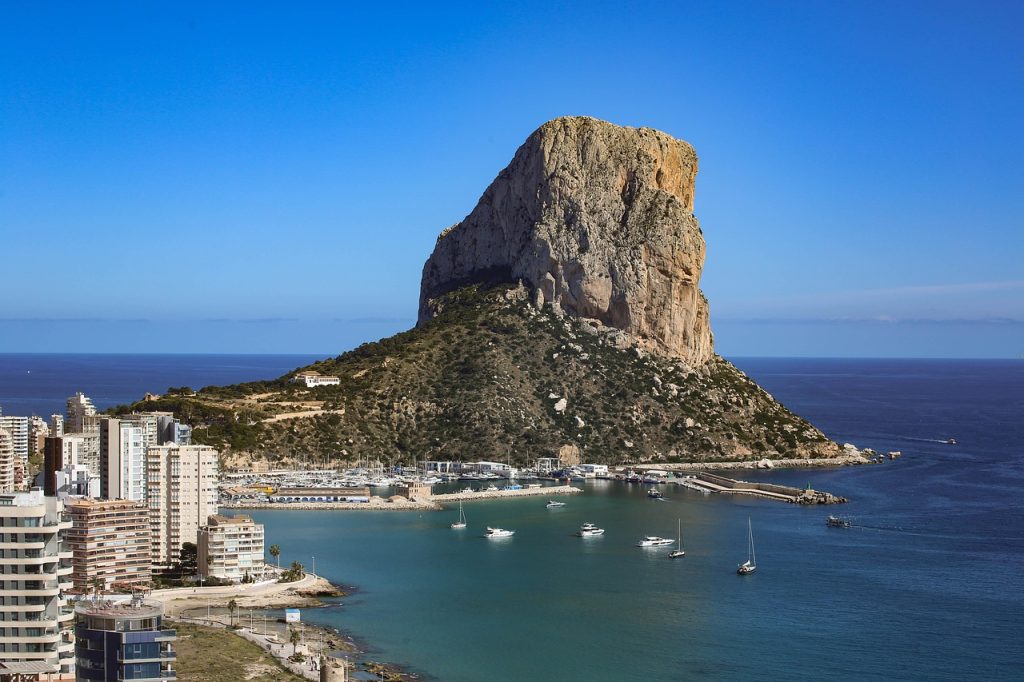
Elevation: 332 metres
And now for the obvious question.
Where is Peñón de Ifach?
Well, technically, it isn’t in the original five.
But there was no way we were going to write an article about the mountains of the Costa Blanca and leave this one out.
Rising dramatically from the Mediterranean beside Calpe, the Peñón de Ifach is one of the most recognisable landmarks anywhere on the Costa Blanca.
At 332 metres, it is considerably lower than Aitana or Puig Campana.
But height isn’t really the point here.
The Peñón is about presence.
The enormous limestone rock rises almost vertically from the coastline, connected to the mainland by a narrow strip of land. From Calpe and the surrounding coast, its distinctive profile is impossible to mistake.
It is also a protected natural area and home to a surprisingly rich collection of Mediterranean plants and wildlife.
And yes, you can climb it.
The route begins relatively gently before reaching a tunnel cut through the rock. Beyond the tunnel, the trail becomes considerably more demanding, with steeper and more exposed sections towards the summit.
This is where sensible footwear and a healthy respect for heights become considerably more important than enthusiasm.
But you don’t necessarily need to reach the summit to appreciate Peñón de Ifach.
Even the lower sections provide spectacular views over Calpe, the Mediterranean and the surrounding coastline.
And then there is the view of the mountain itself.
Because unlike many mountains, Peñón de Ifach is perhaps even more impressive when you are looking at it than when you are standing on top of it.
Best for:
- One of the most iconic Costa Blanca views
- Calpe visitors
- Experienced hikers
- Coastal photography
- A memorable mountain experience
- Seeing the Mediterranean from above
So no, Peñón de Ifach isn’t here because it is one of the highest mountains.
It is here because if you’re talking about the Costa Blanca’s mountains and leave out the landmark that appears in countless photographs, postcards and holiday memories, the list simply doesn’t feel complete.
Think of it as the +1 you knew was coming.
Which Costa Blanca Mountain Should You Choose?
That depends on what you are looking for.
| Mountain | Best for | Difficulty |
|---|---|---|
| Sierra de Aitana | Big mountain views | Challenging |
| Puig Campana | Serious hiking & dramatic scenery | Very challenging |
| Serra de Bèrnia | The Forat & spectacular views | Challenging |
| Montgó | Mountain + Mediterranean | Challenging |
| Serra Gelada | Coastal walking | Easy to challenging |
| Peñón de Ifach | Iconic scenery & coastal views | Moderate to challenging |
These aren’t interchangeable mountains.
They offer six very different experiences.
Aitana gives you altitude.
Puig Campana gives you drama.
Bèrnia gives you the Forat.
Montgó gives you the Mediterranean from above.
Serra Gelada puts you right on the edge of the sea.
And Peñón de Ifach?
It gives you the Costa Blanca icon.
That variety is precisely why the Costa Blanca is such an interesting destination for walkers and outdoor enthusiasts.
The Best Time to Explore the Mountains
This is where the Costa Blanca’s climate becomes a real advantage.
Summer can be brutally hot on exposed mountain trails. A route that feels perfectly manageable in cooler weather can become an entirely different proposition under a summer sun.
Spring and autumn are generally much more comfortable for serious hiking.
And autumn is particularly attractive.
The temperatures become more pleasant, the summer crowds begin to disappear and the mountains suddenly become much more inviting.
It is one of the reasons we keep saying that the Costa Blanca doesn’t really have an off-season – it simply has different ways of enjoying it.
Of course, mountain weather can change quickly. Proper footwear, sufficient water, sun protection and checking the conditions before setting off are essential.
The fact that you are on the Costa Blanca doesn’t mean the mountains have agreed to play by beach-holiday rules.
The Costa Blanca Is More Than Its Coastline
Perhaps the biggest surprise for first-time visitors is just how quickly the landscape changes.
You can have breakfast beside the Mediterranean in Benidorm, Altea, Calpe or Dénia.
And within a short drive, you can be surrounded by mountains.
That contrast is one of the defining characteristics of the Costa Blanca.
It is why a holiday here doesn’t have to mean choosing between a beach holiday and an outdoor adventure.
You can have both.
A morning hike.
A long lunch in a mountain village.
An afternoon by the sea.
And sunset back on the coast.
Not bad for one day.
And if you are staying in Calpe, you can even climb a mountain that seems to rise directly out of the Mediterranean before heading back down for lunch.
That’s a pretty good Costa Blanca day.
Five Mountains, Plus One, and Hundreds of Reasons to Explore
Aitana, Puig Campana, Bèrnia, Montgó and Serra Gelada are only the beginning.
And yes, we added Peñón de Ifach.
We had to.
The Costa Blanca has an enormous network of mountains, valleys, natural parks and hiking routes stretching far beyond the places most visitors know.
Some are serious challenges.
Others are little more than scenic walks with spectacular views.
Some take you deep into the mountains.
Others keep the Mediterranean firmly in sight.
And perhaps that is the biggest secret of all.
The next time you look at the Costa Blanca from the beach, don’t just look out towards the Mediterranean.
Turn around.
The mountains are waiting.
And some of the best views of the Costa Blanca are hiding up there.
Just don’t forget to look for the big rock beside Calpe.
You really can’t miss it.




Leave a Reply