

When people talk about the Costa Blanca South, they often mention the beaches, the relaxed lifestyle, and the expat-friendly towns. But beneath all that sits something even more powerful: a microclimate that consistently ranks among the healthiest in Europe.
According to long-standing assessments by the World Health Organization, the climate around Torrevieja and its surroundings is exceptionally beneficial for overall well-being — mild, stable, and unusually dry for a Mediterranean coastline.
Below, we break down what this microclimate actually is, where it begins and ends, and why so many retirees, expats, and long-term visitors choose this corner of Spain for a healthier life.
Where the Costa Blanca South Microclimate Begins and Ends
Although “Costa Blanca South” is a marketing label, the microclimate itself follows natural environmental boundaries — coastline orientation, salt lake influence, prevailing winds, and annual sunshine levels.
Northern Boundary: Santa Pola / Gran Alacant
The northern edge typically starts around Santa Pola and Gran Alacant, just south of Alicante city.
From this point downward, temperatures begin to show the classic pattern of the southern Costa Blanca:
- Warm winters with very few cold snaps
- Low humidity compared to the northern Costa Blanca
- Noticeably drier summers
Even though Santa Pola sits on the edge of the zone, its climate already hints at the stability that makes the region popular with people seeking long-term, health-focused living.
The Central Core: Torrevieja and the Salt Lake Belt
If there is a true “heart” of the Costa Blanca South microclimate, it’s the corridor running through:
- Torrevieja
- La Mata
- Los Montesinos
- Guardamar del Segura
- La Zenia
- Cabo Roig
- Villamartín
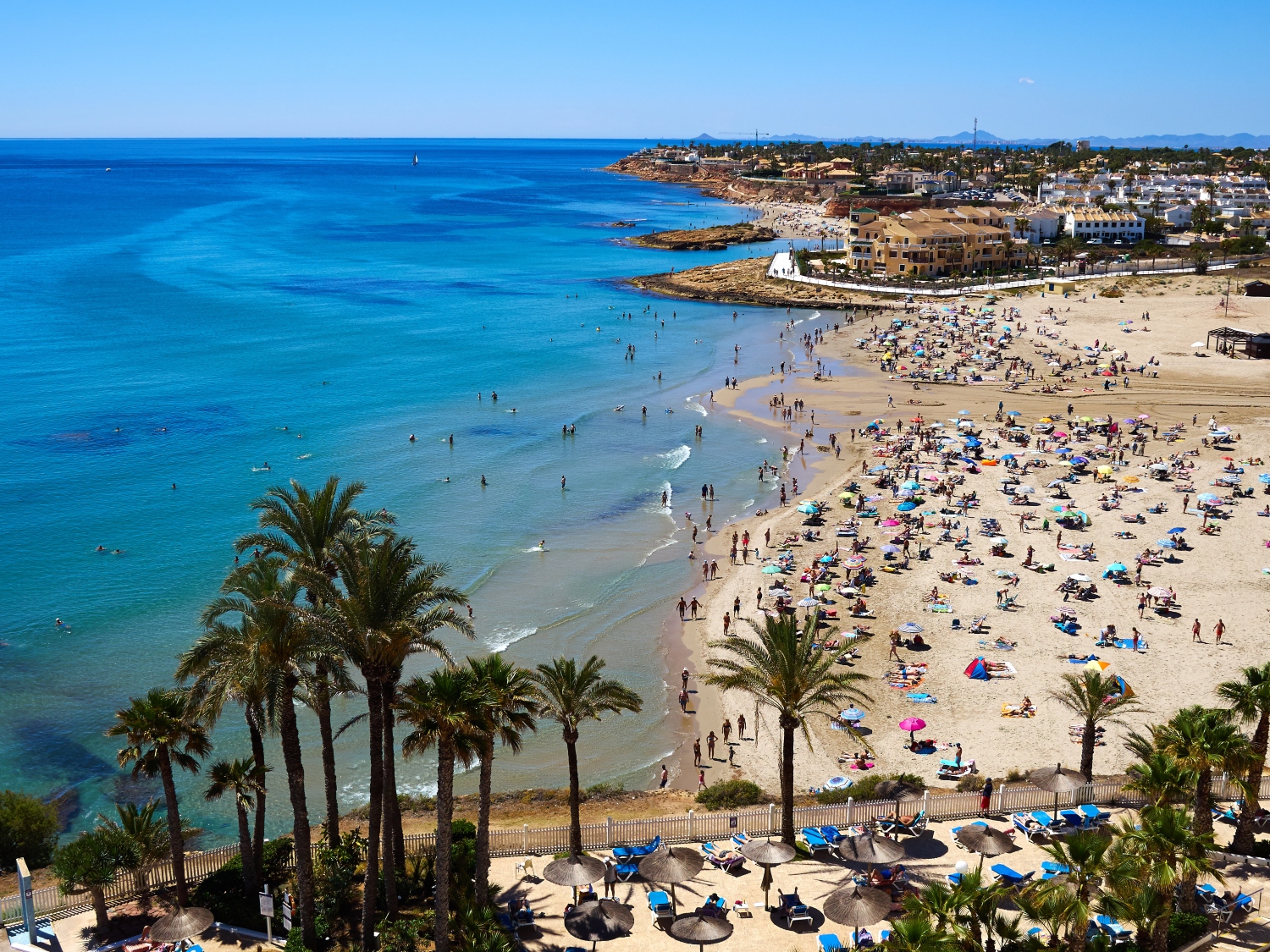
This area enjoys the highest concentration of sunny days and the most balanced humidity levels — a combination that’s unusually stable for coastal Spain.
Why the Salt Lakes Matter
Two natural factors define this zone:
- Laguna de la Mata
- Laguna de Torrevieja

These vast pink and green saltwater lagoons act like natural climate regulators. Their influence:
- They balance moisture, preventing extremes of humidity.
- They create clean, dry, “light” air, which many people with respiratory issues find easier to breathe.
- They help maintain warmer winter temperatures compared to inland Alicante or northern Costa Blanca towns.
Locals often say you “feel” the air quality difference the moment you step outside. For many, it’s not just marketing — people with arthritis, asthma, eczema, or chronic joint pain frequently report improvements within weeks of living here.
Southern Boundary: Pilar de la Horadada to San Pedro del Pinatar
To the south, the microclimate extends through:

- Pilar de la Horadada
- Mil Palmeras
- Torre de la Horadada
- San Pedro del Pinatar
At this point, the climate gradually transitions into the Murcia region and the Mar Menor environment.
The change is smooth rather than abrupt:

- Winters remain mild
- Rainfall stays extremely low
- Sunshine remains abundant
- Humidity increases slightly due to the warm, enclosed waters of the Mar Menor
Even so, the health-benefit reputation extends well into this southern stretch.
What Makes the Costa Blanca South Microclimate So Special?
☀️ 320+ Days of Sunshine Per Year
One of the most reliable sunny regions in Europe.
Clear skies dominate most of the year, giving residents an outdoor lifestyle that’s practically uninterrupted.
🌡️ Warm, Dry Winters
Average daytime temperatures in winter: 16–18°C
Nights are cooler but rarely cold. Frost is almost unheard of.
🌿 Low Humidity + Salt Lake Effect
The presence of two large salt lakes combined with consistent sea breezes leads to:
- Cleaner, drier air
- Reduced pollen concentration
- Better breathing for people with asthma or allergies
- More stable temperatures across the day
Unlike many Mediterranean areas, summers here are hot but not overwhelmingly humid.
🌧️ Very Low Rainfall (Under 300 mm Annually)
This part of Spain is semi-arid, and rainfall is limited mostly to short autumn storms.
For most of the year, the air stays dry, clear, and stable.
🏥 WHO-Recognized Health Benefits
For decades, the World Health Organization has cited the Torrevieja region as one of the healthiest residential climates in Europe due to:
- Salt-rich air
- Sunshine levels
- Low pollution
- Mild seasonal variation
- Stable humidity
This combination is extremely rare outside specific desert or subtropical regions.
Who Benefits the Most From This Microclimate?
People with Arthritis or Joint Problems
Warm, dry weather reduces inflammation and joint stiffness — especially during winter.
Individuals with Asthma, COPD, or Respiratory Issues
The low-pollution, salt-balanced air often feels easier to breathe.
Those with Skin Conditions
The climate can be gentler for people with psoriasis, eczema, and similar sensitivities.
Retirees Seeking Stability
The ability to avoid harsh winters is one of the top reasons retirees settle here.
Remote Workers and Digital Nomads
Between the weather and the cost of living, the Costa Blanca South provides an ideal year-round environment for long stays.
A Few Interesting Facts About the Microclimate 🌞
- Torrevieja and its surroundings receive almost the same sunshine hours as southern California.
- The salt lakes are so influential that humidity can drop noticeably as you drive inland just 3–4 km.
- Local doctors often recommend daily walks near La Mata Natural Park for people recovering from respiratory illnesses.
- The area experiences fewer storms than northern Costa Blanca or Valencia, making the climate surprisingly predictable.
Is It Really “One of the Healthiest Climates in Europe”?
Yes — but not for mystical reasons.
The WHO’s long-standing recognition is based on measurable environmental factors:
- Sunshine intensity
- Air purity
- Humidity stability
- Minimal thermal oscillation
- Low rainfall
- High natural salinity
There are only a handful of places in the world where all these factors overlap in the same geographic zone — and the Costa Blanca South is one of them.
Conclusion: A Microclimate That Shapes a Lifestyle
The Costa Blanca South isn’t just warm and sunny; it’s balanced in a way that genuinely supports health and comfort.
From Santa Pola down to San Pedro del Pinatar, the region enjoys a naturally regulated climate thanks to the salt lakes, the coastal winds, and the semi-arid landscape.
Whether you’re moving for health, retirement, or simply a better quality of life, this microclimate is one of the main reasons so many people choose to stay — and end up calling it home.






Leave a Reply