
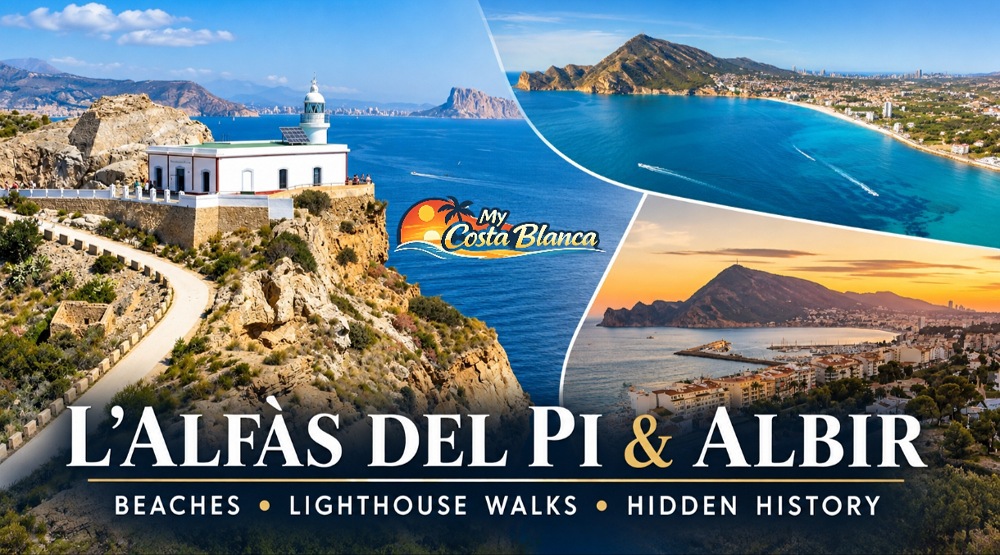
Between Benidorm and Altea, on Spain’s Costa Blanca, lies a destination that offers a different perspective on Mediterranean life. L’Alfàs del Pi combines a traditional Spanish town, a popular seaside district, scenic coastal walks and a surprisingly rich cultural heritage.
Many visitors know the area through Albir, with its beach, promenade and easy access to the Serra Gelada Natural Park. However, the municipality has much more to offer than a pleasant place to spend a day by the sea.
From the famous walk to Faro del Albir to Roman archaeological remains and an international community that enjoys the region throughout the year, there are plenty of reasons to explore this corner of the Alicante province.
Here is what makes l’Alfàs del Pi and Albir worth discovering.
1. L’Alfàs del Pi and Albir: What Is the Difference?
Before planning a visit, it helps to understand the geography.
L’Alfàs del Pi is the municipality, located in the Marina Baixa area of Alicante province. Albir, also written as El Albir, is its coastal district, situated beside the Mediterranean between Benidorm and Altea.
The two areas offer different experiences.
The town centre of l’Alfàs del Pi has a more traditional Spanish atmosphere, with residential streets, local businesses and historic landmarks. Albir, meanwhile, is better known for its beach, seaside promenade, restaurants and access to coastal walking routes.
This combination is one of the area’s attractions. Visitors can enjoy the convenience of a developed seaside destination while also exploring a traditional town just a short distance inland.
If you are planning a holiday, Albir is an obvious choice for beach access and coastal scenery. The town centre is worth visiting if you want to discover more of the municipality’s history and local character.
2. Albir Beach: A Relaxed Mediterranean Seaside Experience
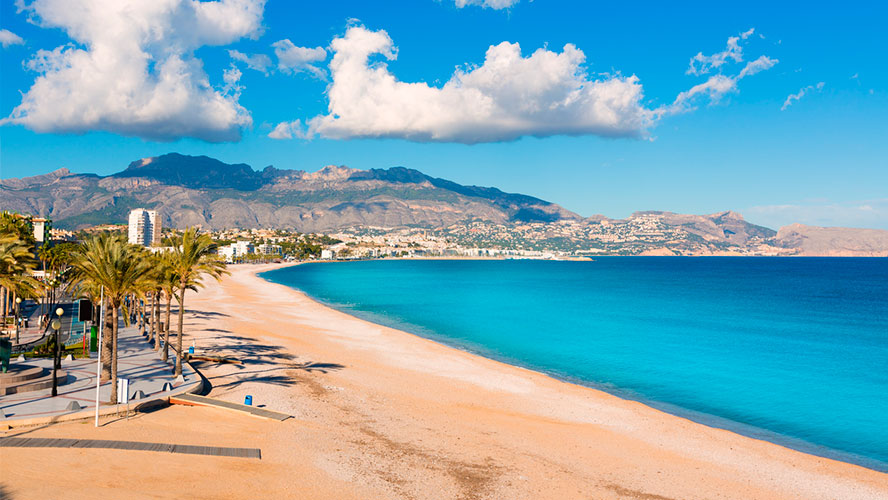
One of the main attractions is Playa del Albir, the area’s principal beach.
Unlike the broad sandy beaches found in some other Costa Blanca resorts, Albir Beach is predominantly covered with pebbles and small stones. Its clear Mediterranean waters and mountain backdrop give it a distinctive character.

The beach sits beside a promenade lined with cafés, restaurants and places to stop for a drink or meal. It is easy to combine a few hours by the sea with a leisurely walk and lunch nearby.
The promenade is also popular with people who enjoy walking, cycling in permitted areas and simply taking in the coastal scenery.
Albir has a Blue Flag beach tradition, reflecting its attention to beach quality, environmental management and visitor facilities. Current awards and available services should be checked before travelling.
Is Albir Beach suitable for families?
The beach can be a good option for families who enjoy swimming and spending time outdoors. However, its stony surface means that water shoes may be useful, particularly for children who prefer sandy beaches.
As with any Mediterranean beach, sea conditions can change. Check local safety flags and follow lifeguard advice when swimming.
The beach is also an appealing option outside the main summer season, when the promenade and surrounding area can be enjoyed without organising the entire day around swimming.
3. Walk to Faro del Albir in Serra Gelada Natural Park
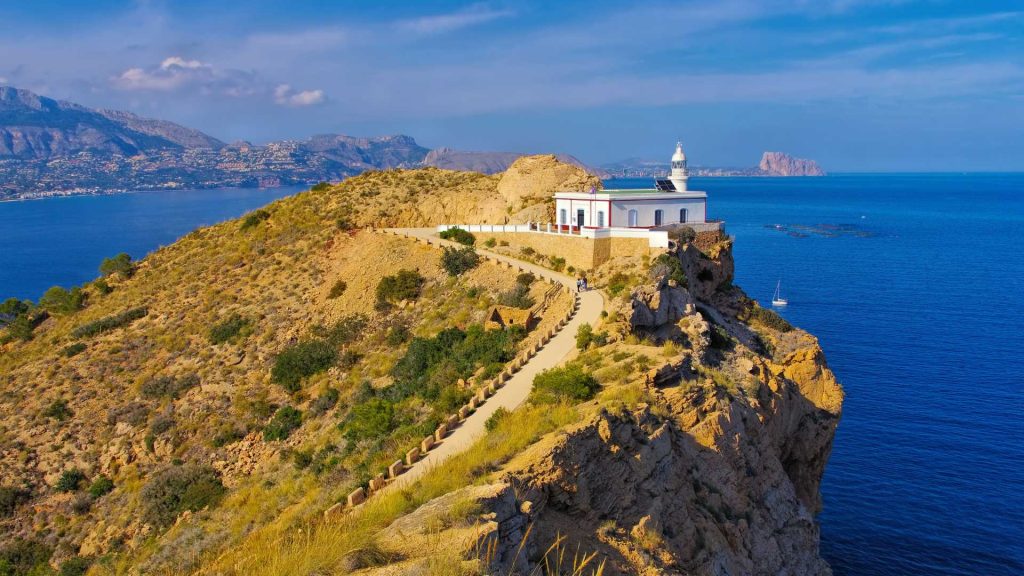
If there is one experience that deserves a prominent place on your itinerary, it is the walk to Faro del Albir.
The lighthouse lies within Serra Gelada Natural Park, a protected coastal area known for its dramatic cliffs, Mediterranean vegetation and panoramic views.
The route to the lighthouse is approximately 2.5 kilometres each way, following a paved track through a landscape that feels surprisingly wild given its proximity to developed coastal towns.
Along the way, visitors can enjoy views across the sea, rocky headlands and the surrounding coastline. Several viewpoints make good places to pause for photographs.
The lighthouse itself has historical significance, while the surrounding scenery is a major reason for the route’s popularity.
What should you know before walking?
The path is generally considered accessible for many visitors, although the total return walk is around five kilometres. The distance and conditions should still be taken into account if travelling with young children or anyone with limited mobility.
Bring water, wear comfortable shoes and protect yourself from the sun. Shade can be limited, particularly during the warmer months.
An early morning or late afternoon walk is often more comfortable in summer than setting out around midday.
Check the official park information before visiting for current access restrictions and any temporary closures.
4. Serra Gelada: A Different Side of the Costa Blanca
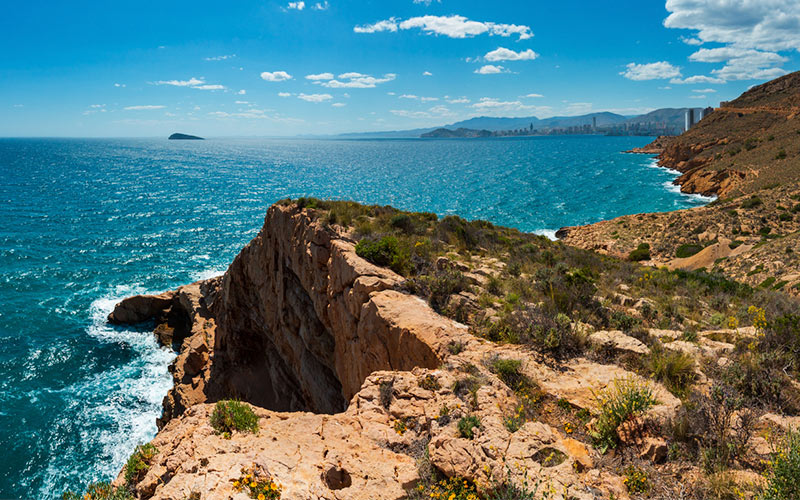
The lighthouse walk is only one way to appreciate Serra Gelada Natural Park.
The protected area extends along a section of coastline shared by neighbouring municipalities and includes striking cliffs, coastal habitats and walking routes with views over the Mediterranean.
For travellers who enjoy nature, it offers a welcome alternative to beach clubs and busy resort streets.
The landscape is particularly attractive to photographers, hikers and visitors who want to explore the region on foot. Depending on the route, walks can range from relatively straightforward outings to more demanding hikes.
The park’s environment is also ecologically important, with plant communities adapted to dry Mediterranean conditions and wildlife associated with coastal habitats.
Visitors should remain on marked routes, avoid disturbing wildlife and take all rubbish with them. During hot weather, check conditions carefully before choosing a longer hike.
For many travellers, this combination of accessible coastal scenery and more challenging natural terrain is one of the strongest reasons to include the area in a Costa Blanca itinerary.
5. Discover the Roman Villa of Albir
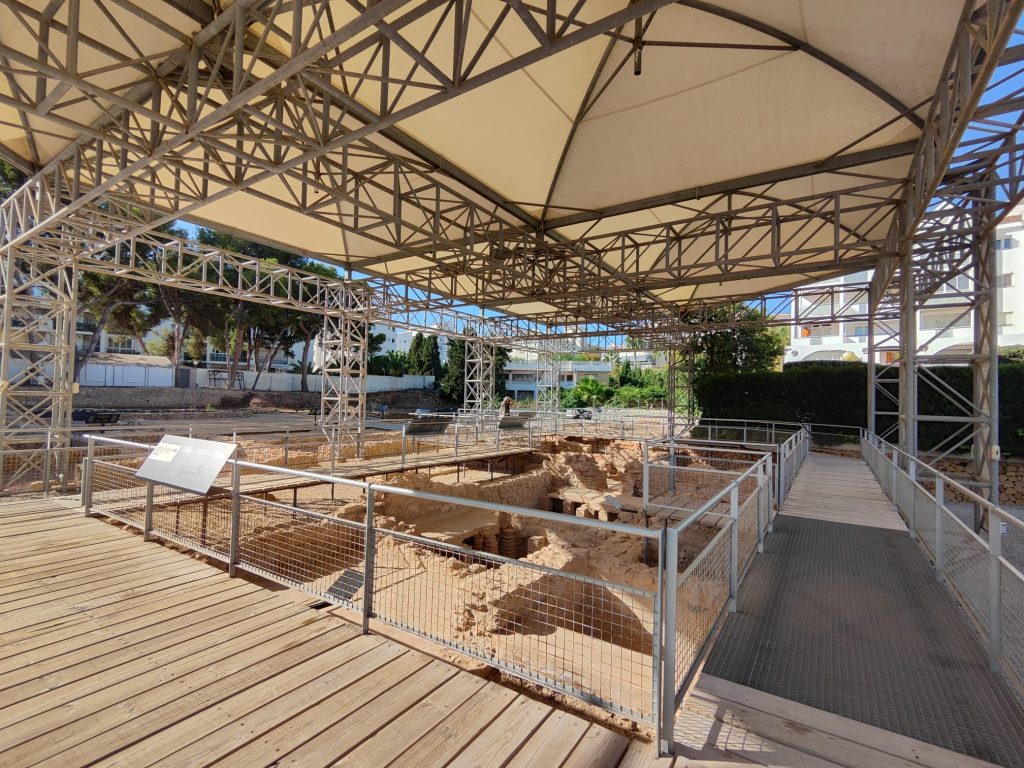
L’Alfàs del Pi has a history that extends well beyond its modern seaside development.
One of the most interesting historical attractions is the Villa Romana de l’Albir, an archaeological site that preserves remains of a Roman settlement and bathing complex.
The site provides insight into life along this stretch of the Mediterranean during Roman times, when coastal communities were connected to wider networks of trade, agriculture and travel.
The remains include features associated with the Roman bathing tradition, illustrating how bathing and social life formed part of the culture of the period.
The site is particularly interesting because it offers a different experience from the region’s more familiar attractions. Instead of a beach or scenic viewpoint, visitors can explore tangible evidence of the area’s ancient past.
If you are interested in archaeology, local history or the Roman influence on Spain, the villa is worth considering.
Check current opening hours and visitor arrangements before visiting, as access to archaeological sites and museums can vary seasonally.
6. Explore the Historic Centre of L’Alfàs del Pi
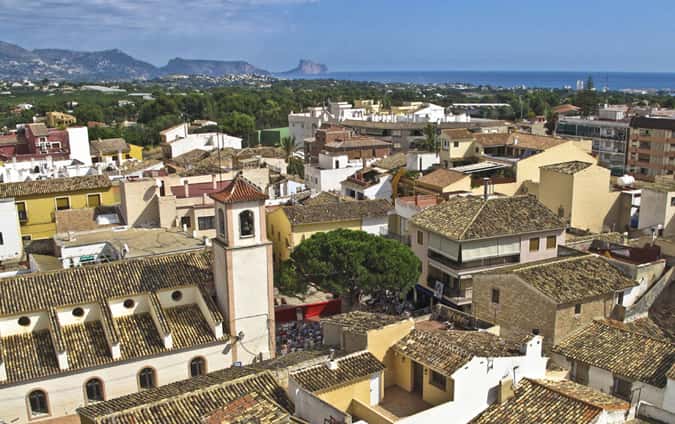
While Albir attracts much of the attention from holidaymakers, the town centre of l’Alfàs del Pi deserves some time of its own.
The historic streets offer a more traditional atmosphere than the coastal district, with local businesses, residential areas and landmarks connected to the municipality’s development.
One of the main buildings is the Church of San José, whose history dates back to the eighteenth century.
A walk through the centre is a good opportunity to experience everyday life away from the waterfront. You can stop at a café, explore the streets at your own pace and discover a side of the municipality that many beach-focused visitors miss.
The contrast between the historic town and the more international seaside district is part of what makes l’Alfàs del Pi interesting.
You do not need a full day to explore the centre, but combining it with Albir creates a more complete picture of the area.
7. An International Community and a Year-Round Lifestyle
L’Alfàs del Pi is known for its international population, including residents from several European countries. This is particularly noticeable in Albir, where the local community includes both Spanish residents and people who have chosen to live in the area for longer periods.
The region’s Mediterranean climate, coastal setting and access to everyday services contribute to its appeal as a place to live as well as visit.
This international character can also influence the visitor experience. In addition to Spanish cuisine and local traditions, visitors may encounter a wide range of international restaurants, cultural activities and services.
However, l’Alfàs del Pi is not simply a holiday resort. It remains a municipality with a permanent residential population, schools, local businesses and community events.
For travellers considering a longer stay on the Costa Blanca, this balance between a developed coastal area and a functioning residential town may be especially attractive.
It is also important to remember that the area can be busy during peak holiday periods. A more relaxed atmosphere is often easier to find outside the busiest summer weeks.
8. The L’Alfàs del Pi Film Festival
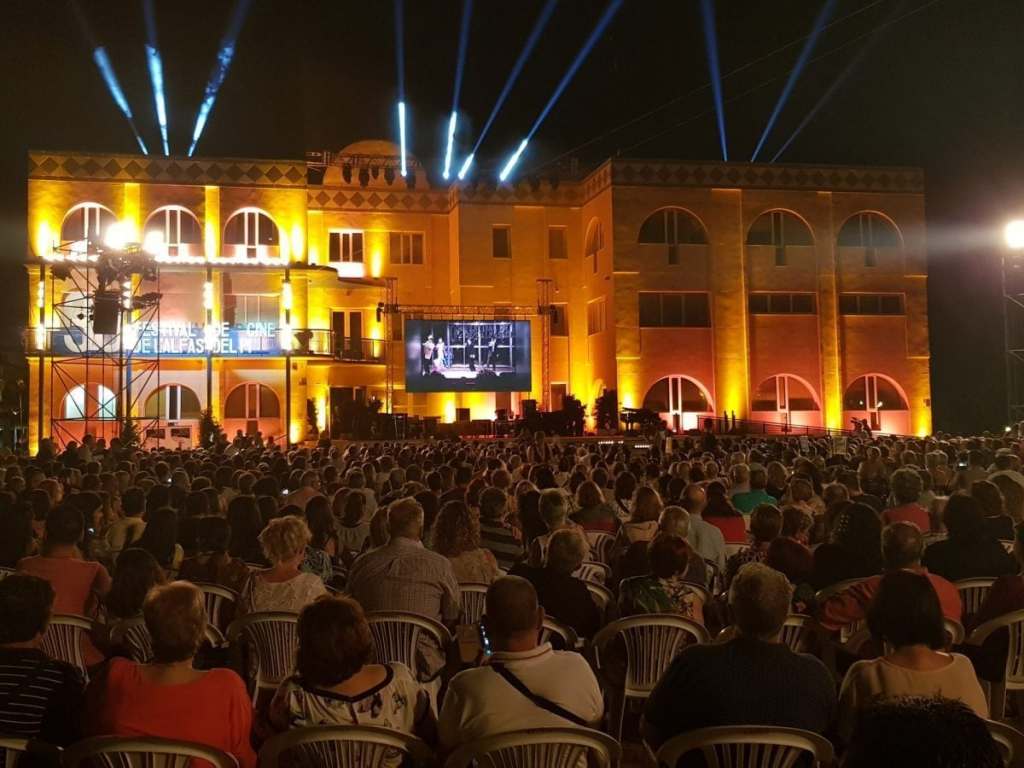
Culture is another part of the municipality’s identity.
The L’Alfàs del Pi Film Festival is an established annual event that brings cinema into the local cultural calendar. It has helped give the town a profile beyond beaches and outdoor activities.
The festival programme can include film screenings, awards and events connected with Spanish and international cinema. Exact dates, venues and programme details vary from year to year.
One of the area’s recognisable features is the Paseo de las Estrellas in Albir, a promenade associated with the film festival and its celebrated guests.
For visitors who enjoy cinema and local culture, the festival offers another reason to consider travelling outside the main summer beach season.
If you want to plan a visit around the event, consult the official festival website for the latest programme.
9. Food, Restaurants and Mediterranean Flavours
The dining scene around Albir combines traditional Spanish cooking with the international influences of its resident and visitor communities.
You can find restaurants serving Mediterranean dishes, seafood, rice specialities and tapas, alongside a range of international cuisines.
For a taste of the region, look for dishes such as arroz a banda, seafood paella and other rice-based meals commonly associated with the Alicante province.
Tapas are another good choice if you prefer to sample several smaller dishes rather than order a large meal.
Albir’s promenade is convenient for a relaxed lunch or dinner beside the sea, while the town centre offers a different setting for discovering local cafés and businesses.
Restaurant menus and prices change, so it is worth checking recent reviews and current menus before choosing a particular establishment.
For a more local experience, ask about seasonal dishes and regional specialities rather than assuming that every restaurant serves the same traditional menu.
10. Things to Do Near L’Alfàs del Pi
One advantage of staying in this area is its location between several well-known Costa Blanca destinations.
Visit Altea
Just north of Albir, Altea is famous for its whitewashed old town, narrow streets and church with distinctive blue-and-white domes.
It is a good choice for an afternoon of sightseeing, photography and exploring small shops and cafés.
Explore Benidorm
South of Albir, Benidorm offers a very different experience, with high-rise hotels, lively nightlife, extensive beaches and a wide choice of attractions.
Visitors staying in Albir can enjoy a quieter base while remaining close enough to visit Benidorm for an evening out or a day of activities.
Discover more of the Costa Blanca
The surrounding Marina Baixa region includes coastal villages, mountain scenery and other historic towns. A car can be useful if you want to explore beyond the main public transport routes.
These nearby destinations make l’Alfàs del Pi a practical base for travellers who want to experience several different sides of the Costa Blanca during one trip.
11. How to Get to L’Alfàs del Pi and Albir
L’Alfàs del Pi and Albir are located between Benidorm and Altea in Alicante province.
By car: The area can be reached using the AP-7 motorway and the N-332 coastal road. Driving is useful if you plan to visit several beaches, villages or hiking areas.
By tram: TRAM d’Alacant services connect the wider region, including stops serving l’Alfàs del Pi and Albir, with neighbouring destinations. Check the current route and timetable when planning your journey.
By bus: Local and regional bus services connect the area with nearby towns, although routes and frequencies depend on the destination and time of year.
From Alicante Airport: The airport is approximately 60 kilometres away by road, depending on the route. Travel time varies with traffic and your chosen transport.
If you are staying in Albir itself, the beach, promenade and many restaurants can be explored on foot. A car or public transport can help when visiting the historic centre, neighbouring towns or more distant attractions.
12. When Is the Best Time to Visit?
L’Alfàs del Pi and Albir can be enjoyed throughout much of the year, but the best time depends on what you want to do.
Spring is a good choice for walking, sightseeing and exploring Serra Gelada before the hottest summer weather arrives.
Summer is ideal for beach holidays, swimming and outdoor dining. However, it is also the busiest period, and exposed hiking routes can become uncomfortable during the hottest hours.
Autumn often provides pleasant conditions for coastal walks and day trips, with opportunities to enjoy the area after the peak summer rush.
Winter can be attractive for visitors who prefer walking, local restaurants and a quieter atmosphere. Although the Mediterranean climate is generally mild compared with much of northern Europe, temperatures and weather still vary, and swimming conditions are not guaranteed.
For the lighthouse walk, spring and autumn are particularly appealing because they often offer a comfortable balance between daylight, temperatures and outdoor conditions.
Is L’Alfàs del Pi and Albir Worth Visiting?
For travellers looking for more than a conventional beach holiday, l’Alfàs del Pi and Albir offer an appealing combination of coastal scenery, outdoor activities, local history and everyday Mediterranean life.
Albir provides the beach, promenade and easy access to the sea, while the wider municipality adds a historic town centre, Roman archaeological heritage and a cultural calendar that includes an established film festival.
The nearby Serra Gelada Natural Park is another major attraction, particularly for visitors who enjoy walking and panoramic coastal views.
The area’s international community and proximity to Benidorm and Altea also make it convenient for longer stays and wider Costa Blanca exploration.
It is not a destination without visitors or seasonal crowds, but it offers several ways to experience the region beyond the busiest resort areas.
Whether you come for the lighthouse walk, the beach, Roman history or simply a relaxed meal beside the Mediterranean, l’Alfàs del Pi and Albir deserve a place on your Costa Blanca itinerary.
The real appeal of this corner of Spain lies in its variety: a beach in the morning, a coastal walk in the afternoon and a historic town or neighbouring village to explore the next day.




Leave a Reply